← All our cities🇵🇹 Portugal
Living in Porto
The river on one side, the Atlantic on the other, and twenty-seven minutes between the two.
The river on one side, the Atlantic on the other, and twenty-seven minutes between the two.
Porto fits into 41 square kilometres, two and a half times smaller than Lisbon, and it is exactly what makes daily life work here: you do not lose your life in transport. The oldest wine region in the world, UNESCO listed, is two hours away by train.
It is also a city where you eat better and pay less than almost anywhere else in Western Europe. Put like that it sounds like nothing. Six months in, it is what everybody talks about.
Porto is lived on the water. The river crosses the city and meets the ocean a few metro stops away, and the train line that follows the vineyards leaves from the station in the centre.
Line A runs due north to Matosinhos Sul, with a train every four minutes during the day. A long sheltered beach, surf schools, and a whole promenade of grilled fish restaurants.
The Senhor da Pedra chapel stands directly on the sand, and the tide comes in around it. Ten minutes on foot from the station, and one of the most photographed sights in northern Portugal.
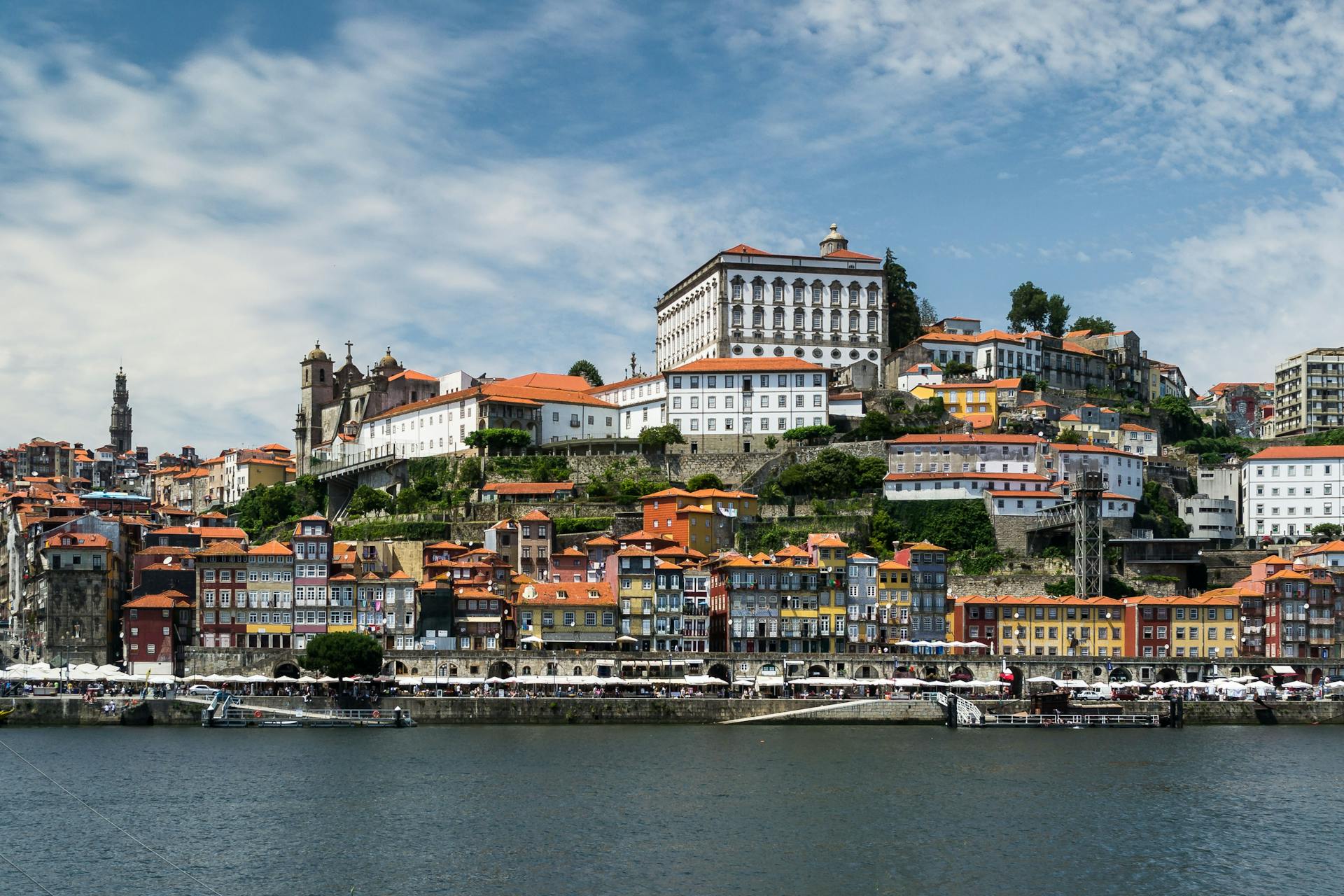
The other side of the Dom Luís I bridge: the lodges where port ages, the rabelo boats moored along the quay, and the best view there is of the old town.
The oldest demarcated wine region in the world, UNESCO listed since 2001. The train leaves from São Bento and sticks to the river from Pala onwards. Sit on the right.
Six lines, 85 stations, and a train every four minutes on line A between 7am and 8pm. Trindade to Matosinhos Sul: 27 minutes exactly.
The oldest demarcated wine region in the world, UNESCO listed since 2001. The train follows the river from Pala station onwards: sit on the right.
The Parque da Cidade and its ten or so kilometres of paths, one of the largest urban parks in the country, running down to the seafront.
Two and a half times smaller than Lisbon. Most everyday journeys are made on foot.
Porto does not sell heatwaves, it sells mildness: an average high of 24°C in July and 14°C in January, eleven degrees more than Berlin. It rains on as many days as in Paris, and twenty fewer than in Brussels. It rains harder, not more often, and there are 800 more hours of sunshine a year than in Paris.
| Sunshine a year | Rainy days | January, average high | July, average high | |
|---|---|---|---|---|
| Porto | 2,470 hrs | 110 days | 14.1°C | 24.2°C |
| Paris | 1,660 hrs | 110 days | 7.6°C | 26.3°C |
| Brussels | 1,605 hrs | 131 days | 6.3°C | 23.5°C |
| Amsterdam | 1,780 hrs | 133 days | 6.2°C | 22.5°C |
| Berlin | 1,730 hrs | 101 days | 3.2°C | 25.0°C |
The water stays cool: 19°C at the height of summer. This is a coast for surfing in a wetsuit, not for floating about.
Porto is 300 kilometres further north than Lisbon. The result: on all five destinations, it is consistently quicker and cheaper.
Real prices, not the ones on the tourist streets.
The same transport pricing as Lisbon, frozen for seven years, and free up to the age of 23 for residents of the metropolitan area.
It depends on the role, the language and the employer, and a good share of our roles also come with help towards accommodation and the cost of getting there. Your recruiter gives you the exact detail, package included, before you commit to anything.
Asking rents per square metre, April 2026. The city average is €16.60, a quarter less than in Lisbon.
A former industrial freguesia, since converted, the densest in the city, with old factories reused in the middle of the urban fabric. The best ratio of centrality to price in Porto, and rents here fell by 10% in a year.
🚇 Metro at Campo 24 de Agosto and HeroísmoUniversity and hospital territory, residential, no tourists. Not much charm, but a low rent and a metro to the centre with no change.
🚇 Metro line D, direct to Trindade and São BentoThe neighbouring town, with a seafront and a fishing port, a city beach, and the best grilled fish street in the country. The sea without paying Foz prices.
🚇 Metro line A · 27 min from TrindadeThe other bank of the Douro. The port lodges along the quay, a quiet residential hinterland right behind them, and 22% less per square metre than Porto proper.
🚇 Metro line D · the Luís I bridge on footThe neighbourhood of galleries, concept stores and university faculties. More than half of the residents are between 25 and 64. It sits on the stretch shared by five metro lines: a train every two minutes.
🚇 Metro at Lapa and Carolina Michaelis · 5 linesWorth avoiding when you first arrive: Ribeira, Sé and Vitória. The most expensive area in Porto, 14% above the average, in steep narrow streets and old housing. Beautiful to visit, exhausting to live in.
The Piscinas de Marés at Leça da Palmeira, designed by Álvaro Siza, are seawater pools cut into the rocks in bare concrete. They are a masterpiece of 20th century architecture, and you swim there for the price of a municipal pool ticket.
Miramar beach is 17 minutes by train from Porto Campanhã. Its chapel stands directly on the sand, and the tide comes in around it.
The stretch of metro between Trindade and Senhora da Hora is used by five different lines. On that axis, nobody ever checks the timetable.
Salary shown upfront, a signed job offer before you fly, and the local language is never required.
Fifteen minutes on the phone with a recruiter who lives there. We go through the open roles, the package and the timing.
Hiring multilingual talent? We cover the European markets. ★ 5.0 · 132 Google reviews What we do for you →
Measurement and attribution
With your consent, we keep for 90 days a record of the campaign that brought you here, so we know what works. Our audience measurement is anonymous and needs no consent. You can change your choice at any time. Privacy policy